Thursday, 11 October 2018

s t r e t c h i n g o u t t h e a r t m u s c l e


We’re working on a proposal for a new artwork for an exhibition titled The New Age of Babylon. Our piece is going to focus on how science fiction films often present viewers with visions and hypothesis for the future, Terry Gilliam’s dystopian film Brazil (1985) gives us a glimpse of a bureaucratic future in which people live in ‘Utopian People Housing’. This housing, situated in The Shangri La Towers, is directly connected to a power station churning out smoke. 


The work itself comprises of fragments of the design process that would have gone in to making The Shangri La Towers in Terry Gilliam’s dystopian film Brazil (1985). No longer needed, these items have been discarded and utilised for other, more menial, tasks: a book mark, folded paper stabling a chair, and maquette of The Shangri La Towers acting as a door stop for one of the entrances to the gallery. 


An architectural sketch of the Towers will be folded and placed under the leg of an unstable chair in the corner of the gallery (near the main entrance), which the invigilator of the space is invited to use. The invigilator will also be given a bookmark they can use in their book if they are reading one (if they’re not reading, we will provide a book that can be placed near the invigilators chair). The bookmark will feature a design plan for the cloud pattern painted on the cooling towers of the utopian housing development. A small detailed maquette (30 x 20cm) of the Shangri La Towers will be placed by the entrance via CSM reception to act as a doorstop. 


New Babylon is a design from the past for the future. Our proposal is begging the question of what happens to those plans, now that the future has become the present and those plans haven’t quite come to fruition. We see a parallel between this and films and literature set in the future. This is the beauty of Science Fiction; it has the ability to tell a story that relates to the current world, but which can be set in a future of limitless possibilities. Until you reach 2015 and realise self-drying clothes, flying cars and hover boards aren’t yet available (Back to the Future 2 predictions), there’s no one to tell you, you’re wrong. 


In Terry Gilliam’s Brazil (1985), we see a portrayal of how someone can at once be a victim of the society they inhabit and also complicit in helping that society function. The now dysfunctional metropolis depicted in the film was built with the intention of it being a paradise; the infamous tower block Shangri-La Towers is named after the utopia described in James Hilton’s Lost Horizon. This, like Constant Nieuwenhuys’ New Babylon, is another idea where time has caught up and reduced its function to viral that of a brick or small piece of wood. Holding only value to those who desire to prop open a door.

t a t e a i n ' t s o b a d a f t e r a l l


Managed to see Christian Marclay’s Clock at Tate Modern 3 times in the past week. The idea is brilliantly simple and completely audacious. It’s literally called “The Clock” and lasts 24 hours, and potentially the world’s most popular piece of conceptual art is a gigantic collage of film clips – old and new, black-and-white and colour – showing thousands of glimpses of clocks, watches, sundials and snatches of people telling each other the time, all set up to correspond to real time wherever it is shown, right round the clock. It’s been really fun to be able to pop on for 20 minutes or so and see something different.


While there we also got to check out Tanya Bruguera’s new turbine hall commission. It’s probably the least visually spectacular work in the Turbine Hall so far we’ve ever seen; no giant slides, no vast yellow sun. Yet it might be the most radical. Through “stealth interventions”, Bruguera asks us to wake up to the migration crisis.


Thunderous rumbles intermittently shake our bones. In a “crying room”, tears flow from our eyes, induced by chemicals; a sardonic response to superficial or even absent empathy. The work’s title — the number who migrated from one country to another in 2017, plus those who died trying — is literally stamped on our skin and will rise as more perish. Bruguera has involved Tate’s neighbours too. The Tate’s north building has been renamed in honour of local activist Natalie Bell. Bell has also suggested the subject of a photographic portrait concealed in the Turbine Hall floor itself — Yousef, a Syrian migrant who found support through Bell’s SE1 United charity. The portrait is hidden under a heat-sensitive floor. If enough people pack onto it and then rise up as one, the portrait will be revealed.


Thursday, 4 October 2018

f r i e z e w e e k i s u p o n u s


We visited a couple more Frieze openings this week! One being Chris Burden's very pristine, very meticulously executed show ‘Measured’ at Gagosian. Ever since learning about Burden’s work we’ve been big fans, especially the the early work where he caused himself pretty serious physical damage and did the whole does-what-it-says-on-the-tin labelling. Since Burden is sadly no longer with us, here we see the type of work he was making towards the end of his career, installations and sculptures. There’s always a weird feeling when you walk into Gagosian’s Britannia street gallery...perhaps it’s that nothing can ever be as spectacular as the interior of the building itself; massively tall ceilings and totally blank walls. Therefore, when you’re presented with a porshe counterweighted with a meteorite, or a crane truck painted to show its weight-lifting ability, it’s strangely unimpressive. Even so, Burden played such an important part in the birth of performance art, and it's definitely worth taking the time to see these artworks on display, even if it’s just to marvel at how well the cars have been restored. 


Another opening we went to was a project by Ryan Gander and Jonathan P. Watts titled ‘The Annotated Reader’. The final product is a 281 page crowdsourced document, where contributors were invited to select the one piece of writing they would want to keep them company if they’d missed the last train somewhere, and asked to annotate their text with notes, thoughts, feelings, drawings and more. The amazingly layered results are arranged on the gallery walls to be collected and taken away in paper form, or available as a PDF from a vending machine. One of our favourites was Andy Holden’s page; he had selected a page where Charlie Brown is attempting to make a birdhouse but is worried about his poor craftsman skills. He then goes on to say that it's going alright - very much how artists produce work. Very knowing/funny. 


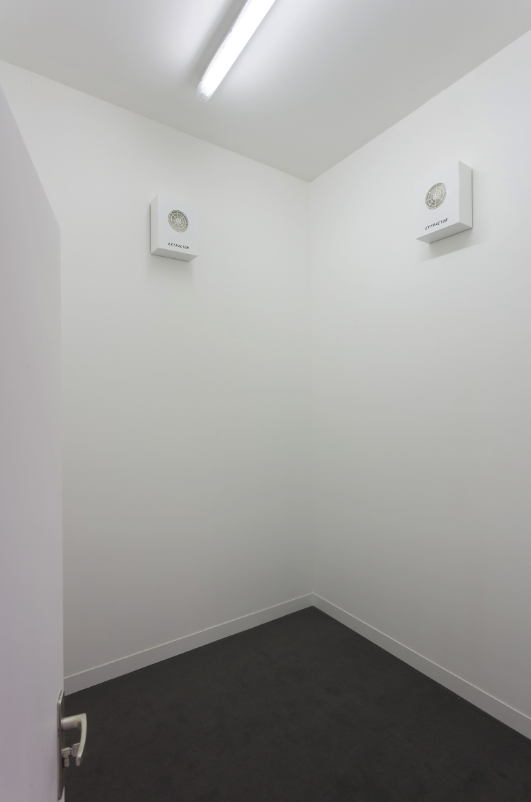
Frieze was particularly dull this year; only a couple of things that really stood out as being really great and the rest was very same-y/missable. Something very clever (almost frustratingly so since it’s something we would love to have made) was a separate room within the Stephen Friedman Gallery room. It was a work by David Shrigley which consisted shrigley’s vocal imitation of extractor fans and a series of mock extractor hoods. A continuation of him demonstrating his uncanny ability to play with the mundane nature of banal objects and scenarios. 


We also visited Sunday Art Fair which is could be described as the “poor man’s Frieze” but nonetheless we still managed to find a great work which we really loved! It came in the form of a trick shot video by Josep Maynou. We’re unsure of whether these are all by the artist or just a collection of videos they’ve sourced from the internet. Either way, was a fun contrast to all the mediocre wall based work.

Thursday, 27 September 2018

e a s t l o n d o n e x h i b i t i o n s


Hit up a few shows this week. The first was Soufiane Ababri at Space Studios. The installation is made up of a series of drawings; a chain of dancing figures painted directly on the wall; a sculptural form functioning as a barrier to restrict movement as well as a football enclosure; an audio piece of boisterously cheering football fans; and a macabre performance by three young men embodying characteristics of Holiday, Fashanu and Malcolm X. The exhibition’s central point are the 6 intimate and erotically explicit drawings entitled Beautiful Fruit, inspired by pornographic films of gay black men engaged in sexual acts with each other. The drawings attempt to dislodge the black body from tropes of blackness and hyper-masculinity, such as athleticism and animalism, which have been deeply inscribed by the Western heterosexual and racialised colonial gaze. 


Next was Cell Project Space with Alan Michael’s Astrology and the City. It’s one of those shows of paintings that are nearly interesting but really the artist is just trying to find a thoughtful context for work they’ve already decided to make. The show is a series of paintings based on photographs of models hired from an agency who are documented wandering through central London, using clichéd formats of classical street-photography and fashion editorials as reference points. 


After that we headed to IMT Gallery for a group show titled Chop Leisure. It’s an exhibition of ideas designed on much the same principles as present-day motorway junctions. Our favourite aspect was the focus on genre fiction and storytelling. As you enter the exhibition go immediately to the photo collage to greet the figure standing in front of it. The press release is very well written too – really takes you on a journey. 


Finally, we had Ryder which felt pretty weird. At certain times during the exhibition, vocalists and performers transform the gallery into an immersive theatre of light and sound. Live voices activate space, producing a chorus that seems to emerge from a primitive instinct, atmospheric resonations that undulate like wind. Natural sounds and chants rise, articulating a transformation from state to state in a sonic ecosystem that is alive and active. 


Actually, quite looking forward to looking round Frieze next week. Even though it’s not always the best place for art it’s quite fun all the same.

Thursday, 20 September 2018

m i x e d f e e l i n g s


Lawrence Abu Handman had an opening at Chisenhale this week and we’ve got some seriously mixed feelings about it… 

The idea of sonic memories and how not all things look the way they sound or sound the way they look is very exciting. However, the show itself is a room full of crap. There’s a bin full of plastic tubing and a cricket bat, a stepladder, metal shelves covered with popcorn, teacups and trainers, watermelons on the floor, big bottles of fizzy drink, a paddling pool. Just a bunch of stuff hastily and messily laid out. The display is frustrating; it feels too much like art objects/trendy assemblages. They aren’t random though, the objects all relate to testimonies such as someone who has described gunshots sounding like “the popping of balloons” or the assassination of Robert F. Kennedy like “somebody dropping a rack of trays”. There’s an additional element to the show which is a pitch-black listening room where you sit and listen to interviews the artist did with detainees of the Syrian prison of Saydnaya. This also makes us feel slightly conflicted because he’s profiting off the pain and suffering of the victims of the sound recordings. Overall, it’s a pretty great show and even one that made us slightly jealous; we also had the opportunity to listen to Handman talk more about his ideas which always helps to sell a show.


Thursday, 13 September 2018

f r o m r a g s t o r i c h e s


Jenny Holzer has a new artist room at Tate Modern which we took a visit to. Other than showing a great span of her very exciting work, it also shows what happens to certain artists when they are given more money; older artists seem to just do what they’ve always done but in a more expensive way. An example being that she used to print her text works on cheap things just as t-shirts and cups, now it’s marble benches and massive LED light strips. This is in no way a criticism but it does make for a weird and very traceable lineage. The legacy does make for a good show which is definitely something which is valued in the artworld.


Went to an opening at Anka Kutleys by Olga Fedorova. We were mostly excited by the massive USB drives made of granite, almost like gravestones to the analogue era.

Sunday, 9 September 2018

s i t e s p e c i f i c a r t c o m e s i n m a n y f o r m s


Holiday time meant we got some reading in. We went for Miwon Kwon’s One Place After Another which is about site-specific art and approaching it as a “problem-idea” (using the authors words) according to its political, cultural and even social dimensions. The author analyses the different reconfigurations of site-specific as a genre within the cultural frame, considering the political and social problematics that accompanied the evolution of site-specific art since the 1960s. 


We always knew we were making work that might blend in to the background or work that is specific to the place but until the last year or so we never thought of it as site specific but reading this book really did cement it in our minds; the work and its context are inseparable. There’s also a great quote by Richard Serra's "to remove the work is to destroy the work". Something which we definitely relate to, we barely keep any of the work we produce because it doesn’t make sense outside of its current situation.