Tuesday, 19 December 2017

f i l m s y o u m i g h t h a v e m i s s e d


Today we decided to take a look into our ‘films to watch’ list and go for something we’ve been avoiding for a while and we landed on ‘My Dinner with Andre’. It’s one of those films that everyone says you have to watch if you’re into films and before beginning it, all we knew was that it was a purely dialogue-based film – just a conversation in real time between two men. While watching, you’re completely entranced by the whole thing and now that we’re sat down trying to write about it, there doesn’t really feel as if there’s much to say other than that it's a simple, dialectic piece of film making that feels like a play. But anyway, it's a conversation between two interesting people who are educated, slightly enlightened, but forever questioning of the structure of the universe. It’s actually a film that was entirely devoid of clichés. This may be because of its unassuming concept, but also because there really is nothing like this film around. 


Some people find the conversation boring and the mood morose, others think the political and socio-economic values of the conversation are too opposed to their own ideals. To love this film, you must love dialogue, subtlety, and the sweet surrender of the theatre (which fortunately we do). Otherwise this film will bore you to tears. If you philosophise, wonder, or debate the many merits of the universe, this is a film that will speak to you on an atomic level. We found the two men interesting, but not fascinating, and that's a good distinction. You want to feel like you yourself could speak about travel, morality, and the sanctity of art, or else you're lost. We were very much taken along for the ride and feel better for it. 


This combined with our recent introduction to Kerry Tribe has influenced us to start thinking more seriously about writing the script for the audition tape film. It was an idea we had for quite some time but now we’ve done the appropriate amount of research to start properly thinking about what we want it to be. We’ve now gone back and watched some of our favourite dialogue-heavy films because our interest in the audition tape films is that there’s nothing to prop up the story, other than the acting; there’s no costume, no set, no props or music, nothing. Just an actor and their craft. 
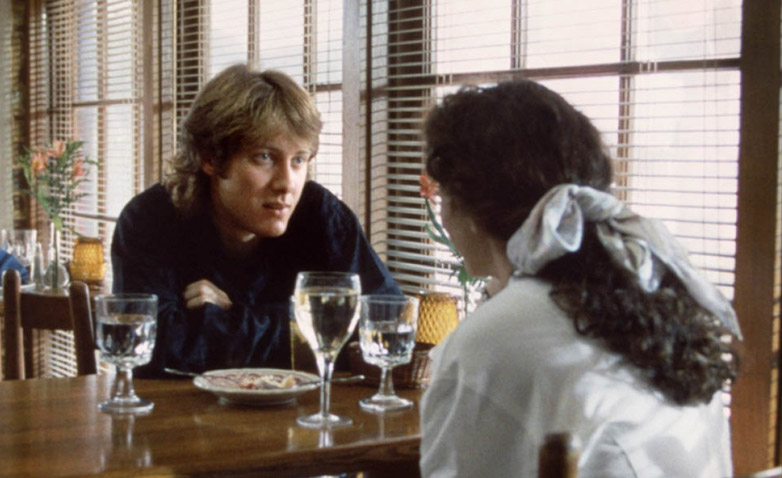

These films which are revolve around the dialogue are as close to what we’re considering as one can get from these types of films. Feature films have something different to contend with when it comes to an audience; they need to satisfy them to make money. This is why we tend to focus on them more than the artist films which can sometimes feel more about portraying a feeling or a certain aesthetic. It’s the notion of how a conventional narrative can be told that we’re investigating. Sorry, we never mentioned the films we re-watched; Sex, Lies and Videotape, Tape, the whole before trilogy directed by Richard Linklater and Room in Rome.

Thursday, 14 December 2017

w a l k i n g a r o u n d l o o k i n g a t a r t


Earlier this week we attended an exhibition at Marian Goodman by Hiroshi Sugimoto called ‘Snow White’. On show are a series of big black and white photos of abandoned cinemas, their screens captured with an ultra-long exposure, letting the light of a whole film pound through the lens. By the end, all that’s left is pure, brilliant, spectral white in the centre of each image. We found a couple of features quite thoughtful even though the work itself didn’t totally stay with us or blow us away. Something we’re always appreciative of is the subtle manipulation or alteration of the gallery space. Here, we see all the windows blacked out and the walls painted a slightly off shade of grey as opposed to the classic white cube (probably to give the white of the photographs more ‘pop’). It definitely created a highly depressing atmosphere; there’s a real sense of things being gone: life, memories, spaces, culture. It’s a morbid mausoleum to time’s passing, the ghostly images are photographic tombstones. 


We couldn’t help but picture Alfredo Jaar’s ‘Lament of the Images’, not only for the aesthetic appearance of a big white rectangle but also the lyricism of it (although Jaar is our favourite of these two). 


Kati Heck’s solo show at the Sadie Coles Kingly street gallery is called Heimlich Manoeuvre and you can really feel it whilst viewing. The initial film is nonsensical but in an amusing way (although a lack of seating did deter us from seeing the whole thing). The main space had been shrunk by building a room within the initial space of the gallery (something we enjoyed but didn’t really understand). Perhaps it was to do with the domestic interior; there was a carpet and paintings hung on the wall? The paintings were huge and unappealing. In this space, chocking and consequently receiving the Heimlich Manoeuvre is the least of your worries.


Next up was the Photographers Gallery. We’re uncertain if this has always been a feature of the gallery but the Media Wall seems to showing consistently entertaining moving image work. Another positive is that it’s in the café and therefore free *Smiling Face With Open Mouth and Cold Sweat emoji* It’s title is ‘Indeterminate Objects (Classrooms)’ and it’s a work by a photographer called Wendy McMurdo. The project is a continuation of her investigation into the relationship between children and computers, and is inspired by young people’s fascination with immersive digital environments such as Minecraft. 


On view, is a series of Victorian classroom interiors at a school where the traditional elements - desks, bookshelves, children’s drawings - are overlaid by a series of hypnotic geometric forms. As these 3D objects hover above the desks, they enter the space of the classroom, casting shadows on the floor which mingle with those of the room. There’s a clever hint towards the various spaces through which childhood is now experienced and visually it’s very exciting but there does seem to be a bit of disconnect between the fairly complicated theoretical side and then the final product.


Thursday, 7 December 2017

m o v i n g f o r w a r d


Currently our research is loosely based around storytelling and the ways in which elements of cinema (such as dialogue and editing) influences how artists/filmmakers tell stories. This has involved us doing some experiments with pre-existing footage, similar to the film about props, where we have taken scenes from films such as “Batman” or “Wolf of Wall Street” and removed all the shots with dialogue to create this strange echo of what once a comprehensive scene. 


Another experiment was looking at the first and last scenes of a film and considering how the journey between the two has mutated the first into the last. One of our favourites being David Fincher’s film about the inception of Facebook called The Social Network (which, on a side note, has more shots with visual effects than the new Godzilla which just proves Fincher’s absolute attention to detail/desire for perfection). 


Aaron Sorkin, the screenwriter for Moneyball and creator of The West Wing, likes to begin his scripts on tilt, a staccato of dialogue, forcing the viewers to listen in order to catch up. His characters often speak past each other, responding with zags to zigs; ignoring one thread only to veer back to it a few seconds later. In The Social Network, he begins the story with nine pages of dialogue between the principal character, Mark Zuckerberg, and his soon-to-be ex-girlfriend, Erica. It is an unorthodox amount for an opening scene, but it establishes the themes of the movie as well as character of Zuckerberg. We’ve slightly degressed into a rant about how great the dialogue is in this film but the point was that in this beginning scene Erica’s final line is “You’re going to go through life thinking that girls don’t like you because you’re a nerd. And I want you to know, from the bottom of my heart, that that won’t be true. It’ll be because you’re an asshole.” Compare this to the final scene of the film where the lawyer Marylin Delpy says to him “You’re not an asshole, Mark. But you’re just trying so hard to be”. There’s a suggestion that there has been some sort of transformation here but one which is very subtle.


We had a personal tutorial which due to unforeseen circumstances wasn’t with our usual tutor but was nevertheless helpful and informative. Some great recommendations came through including artist/curator Gavin Wade who we were already aware of due to his text called ‘The 5 Acts of Art’ where he proposed that art is exhibition, that art is not exhibited but that art exhibits, that exhibition is a fundamental function of being human, and the fundamental process of art. He also discusses how the artist-curator position builds on this ‘truth’ to produce art that is necessary. The artist is a primary producer of art while the curator is a secondary producer (but a producer nonetheless). This is very much in line with our thinking when it comes to things we’ve curated in the past and how we’ve contributed to them in our own way, not necessarily bringing a big spotlight onto us as artists but more as facilitators/organisers. 


Another excellent artist we were recommended who we were unaware of before is Grace Schwindt, who’s 2014 film Only A Free Individual Can Create A Free Society sounds confusing and thought-provoking in the best way possible. The inception of it was an interview between the artist and a German cab driver about his involvement in the progressive West German political fringe from the mid-1960s. Over 70 minutes, their dialogue unfolds across a choreographed performance featuring 11 dancers. The stage is a three-walled, open-air set, reconfigured at intervals, which divides the film into movements. The set itself sits on a hillside overlooking London. Filmed at night, this mise en scène generates a peculiar magic: a kind of esoteric Restoration masque, re-enacted by the Bauhaus. We also watched a talk where she discusses her interest in language and the pre-existing story structures - her desire to breakdown and then rebuild these forms is very exciting and exactly what we’re thinking about.


To add to the previously unheard of is the play “Six Characters in Search of an Author” by Luigi Pirandello. The basic plot is that six characters interrupt the daytime rehearsal of Pirandello's play. Abandoned by their author, they seek a new one to put on their drama. They then convince the theater company's Manager and attempt to stage their unwritten play. We haven’t actually managed to see the play but have read it (even though we understand this isn’t nearly the same thing). There are some truly heavy lines in it which are very meta, a favourite being, “A character, sir, may always ask a man who he is. Because a character has really a life of his own, marked with his especial characteristics; for which reason he is always "somebody." But a man—I'm not speaking of you now—may very well be "nobody." The Father makes this playful comment to the Manager in Act II. Note the mellifluous courtesy of his speech: this rhetorical ploy is typical of the speech he addresses to the company or at his moments of relative reserve. Throughout the play, the Father insists on the reality of the Characters, a reality that, as the stage notes indicates, inheres in their forms and expressions. Here he bristles at the Actors' use of the word illusion as it relies on its vulgar opposition to reality. He approaches the Manager in a sort of face-off to challenge this opposition, one that underpins his identity. Convinced of his self-identity, the Manager readily responds that he is himself. The Father believes otherwise. While the Character's reality is real, the Actors' reality is not real. While the Character is somebody, man is nobody. Man is nobody because he is subject to time: his reality is fleeting and always ready to reveal itself as illusion, whereas the Character's reality remains fixed for eternity as art - what the Actors would call mere illusion. Put otherwise, time enables an opposition between reality and illusion for man. Over time, man comes to identify realities as illusion, whereas the Character exists in the timeless reality of art.


Thursday, 30 November 2017

f i l l i n g t h e g a p s


The open studios went really well! We got some thoughtful feedback about the piece including some kind words from someone in the film department at CSM. With regards to the set-up we went for editing the items which are necessities for the films to play, for example the TV needs to be plugged in and also needs to be on a wall. We stuck with the one cable being exposed whilst the other is hidden and then also got to researching films and ideas associated with wallpaper. Our initial thoughts went to the Coen brothers film Barton Fink where the main character has writers block and there are a bizarre series of events that continue to distract him. The link to the idea of wallpaper is the part in the film where he’s in his hotel room and the wallpaper starts to peel away, making the most incredible sound. 


On rewatching the film, but being conscious of all the wallpaper, we realised most of Barton Fink can be explained by looking at the wallpaper. From the opening and closing credits, showing the wallpaper in its splendid beige beauty, it is one of the more important symbolic elements in the film. This then made us think about the short story “The Yellow Wallpaper”, where the narrator becomes pre-occupied with stripping the wallpaper, thinking she sees somebody trapped behind it. While researching the book we discovered some references to it in pop-culture. A character called Aria from the TV show “Pretty Little Liars” has decorated her room with wallpaper that is the same design for the original front cover of “The Yellow Wallpaper”. We then set about trying to purchase the same wallpaper but had to settle for the most similar one we could find and the results proved pretty successful. It gave the work a very domestic feeling while also not taking the main focus away, contributing factors to an overall narrative. 


We also re-edited the film and removed any naming of the films which actually served it much better - it was now less of a video essay and more of a story being punctuated with imagery that wasn’t necessarily related but because they were next to each other a connection was found. This is then similar to the words on the other screen; we tried a couple of different ideas out - slowing the words down to one a minute, instead of having random objects we would choose them based on the first thing that came into our head when watching the film, having the colour change with the words, asking someone to think of one word to describe it and then doing synonyms of that word similar to the synonym paintings by Mel Bochner. 


However, we settled on having synonyms for the word prop. We felt this was the best method of getting across that props are sideline things - they’re a support structure around which the main event is built. This way, we’re truly foregrounding the things which are usually left in the background.


Thursday, 23 November 2017

r e f e r e n c e s f o r d a y s


The film has now been completed, ready in time for the group tutorial. We’ve been playing around with the setup/display of the screens because we tend to think that having a display that’s relative to the work adds an extra dimension that a lot of artist’s films miss sometimes. Ideas we’ve been considering have been to do with certain references to things that have been mentioned in the actual film. This includes when there’s a mention of the TV in the shining being on but not plugged in, which resulted in us dropping a cabled for one of the TVs behind the wall and the other TV actually having its own extension cable to make it a little more obvious that it’s plugged in. Another thought was to have a kind of wallpaper or in some way edit the wall on which the TVs are hanging. We even considered having some photography lights up but thought that this was a little forced and obvious as opposed to the subtlety we were originally going for. The tests will continue until the open studios Friday when we’ll make a final decision. 


Monday we attended a lecture by Rebecca Ackroyd which we had mixed feelings about. We had experienced her work before the lecture at the Zabludowicz Collection and weren’t completely taken by it but found it thoughtful with regards to the space it was in. this lead to us hoping that some extra context by the artist herself would bring it to life. Unfortunately this was not the case; every time she sounded like she was about to say something which might tip the scales she would manoeuvre round it. An example being a sentence like this which came up fairly frequently. She said something along the lines of, well when I first visited the space I knew that I should really embrace the architecture since it was fairly overpowering, so I really wanted the work to do something about that. What is she referring to here? Do “something” what something did she want it to do? The notion of the work reflecting the environment is definitely an important one and something that is highly engaging but the vagueness of her intention was slightly frustrating. However, this didn’t distract from our thoughts on the work and in fact, the reason that we’re being so picky about the way she was discussing it probably means that we were just eager to learn more. And who knows, she did preface the talk with the idea that she’s not as good at talking about what she makes anymore and perhaps that’s set her free. One of the more poignant things she said was that the work is focused around a loss of familiarity which she described as visitors potentially feeling un-comfy. This comes out of using recognisable imagery such as body parts or everyday objects (carpets or blinds) but editing them in some way to set uncertainty in motion. This felt very relevant with regards to our own work – attempting to engage an audience, draw them in with familiarity but then leave a mystery or scenario unsolved. 


The tutorial was fairly successful! Success here being defined as good amount of constructive feedback and plenty of applicable references to go away and research. Something that was mentioned was the line "did I mention weapons" which was too much of an attempt to be funny. We agree about this and the deadpan delivery is knowing enough for carry it through without forcing it. Another comment was that it felt like some sort of test which we had noticed before but weren’t sure if other people would too. It does definitely look like an association game/test similar to the one in Blade Runner where they ask them to image certain things and monitor their reactions. Here perhaps what is potentially being monitored is whether or not you can find a connection between the words and the imagery. Another very relevant observation was that we have always stopped and started stories because of reading; it’s quite rare to fit down and read an entire book but until recently one would always watch a film in one go. However, now with Netflix and other online providers we’re able to watch for any length of time. The point being that one is now able to almost edit a film as they watch it. Just in the same way we’ve put various bits and pieces together to tell a particular kind of story, other people may start and stop a film and get a different experience than someone who watched the whole way through. 


There were some excellent references thrown our way. Something fairly obvious but certainly necessary was looking further into the idea of semiotics so we’ve got a book titled ‘This Means This, This Means That: A User's Guide to Semiotics’ which we will read through. We were then recommended ‘This Is a Generic Brand Video’ which is made entirely from stock images from Dissolve. It’s a very tight film, if not a little cheesy but it certainly makes the point about objects and imagery being blank slates and people applying meaning to them based on their own agenda or thought process. 


The artist Mark Lewis was also mentioned. He’s someone we’ve been a fan of since Venice Biennale in 2009 and then had our love rekindled at a talk he gave a couple of years ago. Some truly genius ways of thinking about film and the methods by which it’s constructed and how that informs a certain narrative. We’ve since gone back and watched a couple of interviews with him and he says some truly poetic and beautiful things about the moving image such as the fact that we’ve had the cinematic experience since the beginning of time, the first time a human looked into a pond and saw their reflection, they were watching a movie. said exactly the thing we were considering when having huge gaps if silence in our video; the lack of sound abstracts the visual experience, it removes its fullness and asks us to imagine the missing elements through the visual. The link below is one of favorites of his (although it's not silent) watch from 9:18.
 

Laura Mulvey’s text ‘Death 24X A Second’ was also brought up but we’re yet to read it since we’re getting ready for the open studios but will make sure we do before since it sounds like the perfect book when considering narrative and the spectator. Michael Craig Martin’s 1973 piece ‘An Oak Tree’ was briefly spoke about in reference to attaching meaning to objects and words.


Then we went onto sound and how that can be a big influencer of narrative. David Toop’s book Sinister Resonance sounds excellent and is now also on the ‘to read’ list. It discusses the history of listening and how sound often functions as a metaphor for mystical revelation, forbidden desires, formlessness, the unknown, and the unconscious. 


Kerry Tribe is an artist who we’ve heard of before but never really investigated and since doing so have been truly blown away. Her piece ‘The Audition Tapes’ is so similar to a work we’ve been thinking about for a while. It basically documents the casting call for a project advertised in an acting magazine as "an experimental documentary on family history and memory." The monologues and dialogues the actors deliver were developed from transcribed interviews with members of Tribe's immediate family. Each of the fifteen actors included in the tape speaks as one of four real characters. But as one watches, the stories they narrate begin to fragment, repeat themselves and contradict. Different accounts of the same events emerge and actors project their own desires and expectations onto the characters they portray. 


We love the aesthetic of audition tapes and spend quite a lot of time watching them on YouTube. This is because it’s a purely dialogical moment; there’s no set, no costume and not really any other actors. It’s the most difficult moment for an actor because they have nothing to support them, just words on a page. A favourite audition clip is Aaron Paul from Breaking Bad trying out for the part of Jesse and half way through he breaks character due to forgetting a line and gets reminded of it by someone off screen. In that moment you realise you haven’t been watching the ‘proper’ performance and even though the illusion was so minimal in the first place, it’s broken right in front of you.


Monday, 20 November 2017

t r a c e s c o m i n g t h r o u g h


Attended a talk/in conversation with Andy and Peter Holden about their Art Angel commission, Natural Selection which was an absolute pleasure. They’re both just as intelligent and charismatic as you would expect and a particularly exciting feature was how much stage time was given to Peter. For no other reason that it felt important to the work to be able to learn about his connection (or lack of) to the art world. Andy was then his way in/guide to learning about this part of the world even though he’s obviously a clever and by our assumption liberal person. This then relates back to their common interest in birds and how Peter was the instigator of that and now Andy has done the same thing with art. Learning about their first work together was also beneficial; Andy invited him to come and give the same lecture he had seen him do previously. This for him was a readymade – taking something that previously existed from one place and refreshing the context.


The new film is going well! After getting quite far through it we weren’t sure what it was doing. Initially we wanted to make people think more about the world around them and how everything is constructed but in order to do that we need something to bounce the examples off of. Some sort of juxtaposition. This will probably come in the form of a second screen, intentionally detached from the other one as opposed to just having a projector with two sets of imagery on it. At the moment, we’re considering having just everyday objects on there – sofa, fridge, backpack etc. The images from the Ikea or Argos catalogue are perfect because they’re just images in white space, no context at all. 


The lack of context/surrounding is important in order for other people to bring their own context to them. Another method would be to only use a word which would then be an entirely dematerialised object and only becomes an object in the mind of the viewer. It then becomes about value, choice and judgement; everything is a prop, the only reason you think they’re important in the films is because someone’s decided they are, same with art. It’s about giving something value through choice and consequently applying meaning to that thing. What occurs in a gallery a handful of times a year happens every day out in the world, which is one of the reasons are is important, it helps you stop and look at it all. 


Wednesday, 15 November 2017

i t a l l s t a r t s s o m w h e r e


Managed to finally visit the new commission in the turbine hall at Tate Modern (finally because it’s been up for a while as opposed to because we’ve been anxious to see it). There’s been plenty of negative reviews so our feelings towards it were always going to be skewed. However, it actually felt OK. Not brilliant by any means but fun none the less. This was aided by the swings being for 3 people as opposed to just the one by hindered by the show’s half hearted “production” section at the far end of the hall. This aspect felt unnecessarily explain-y for something that is really just a bit of fun and shouldn’t try to apologise for being so.


Also managed to just catch the show at White Cube before it finished. First up was Ann Veronica Janssens, a name some may recognise from her show at the wellcome collection last year featuring in Facebook profile pictures everywhere, the room full of coloured mist. Her work is quite material based for us but absolutely beautiful objects which are impossible not to admire. However, describing her works as material based is slightly strange since in some ways they’re fairly “non-material” or ephemeral due to being constructed out of light or mist. When we say the word material it’s more focused around the aesthetic/desired look. These are truly what people are talking about when they describe art that needs to be experienced in person.


Next there was Cerith Wyn Evans doing his thing with neon lights. It was actually a very appropriate space for it; long and thin. But even though the work fitted perfectly into the room it didn’t make it much more exciting than previous iterations.


Finally, we had Damián Ortega whose press release began with a quote from him which perfectly sums up the way we feel about most art-making. He speaks about art being an “un-learning process”, which we take to mean that it’s linked to notions of deconstruction and general investigation into “truth” or things taken for granted. In addition to that, the show was very well put together. It was a proper body of work that really related to each other without being the same work or the same idea, it truly flowed. This ties in to how he thinks about art and science – both are exploratory and creative in their own right and take you on a journey of discovery. The linking of art and science is also something that is visible in the work produced as well as the method of producing. There are these subtle references to the solar system and geometry throughout the show, very strong indeed. 


There’s another podcast up on Artists and Friends which is the exclusive podcast we recorded with isthisit? founder Bob Bicknell-Knight for the second issue of the isthisit? magazine where we discuss the themes of the magazine such as memes and appropriation on the internet. Listen in >>>here<<< and you can pick up a PDF of the second issue below >>>here<<< or pre-order the third issue >>>here<<.


With our own practice we’ve recently been researching more into ideas of implied narratives and the potential beginnings of where it might have come from. This continues on from the exhibition in Manchester, An Exchange of Sorts, which as we may have already mentioned is based around emerging artist’s relationship to money, and making money with their practice. Our work is several subtle contributions to an overall narrative. The narrative being that of an artist (us) trying to make themselves 'sellable' but failing. The works themselves will come in the form of a postcard rack full of postcards of our previous works, a monitor which has a Sid and Jim advert/explainer video of our artistic practice that's made by someone on the website fiverr, an abandoned signing table of signed photos of the Sid and Jim stock image with a roll out ad board with the same image on it and then a crumpled up (but still visible) artist cv on the ground. These are then distributed throughout the space as opposed to being in one place; similar to a trail of breadcrumbs. The general thinking is that it's a variety of failed attempt to be successful/noticed; making postcards which haven't sold, a film which is supposed to act as a promotional tool but just seems impersonal and weird, a sort of fan meet up where no one showed and a cv that never got a the owner a job which has consequently been discarded. It opens tomorrow so will post images when we get them!


We’re also starting on a new film with a similar link to implied narratives. It’s going to be about film props and how they’re used, the script is just about done but we need to decide on what films to use and when since it’s going to be made up of many shorts clips/examples from other films with a voiceover.